The Collegian Effect
Kenyon produces top journalists without offering a journalism degree.
Read The StoryXander Newman ’26, a studio art and gender and sexuality studies major from St. Louis, describes the process of re-creating Peirce Hall, one block at a time.

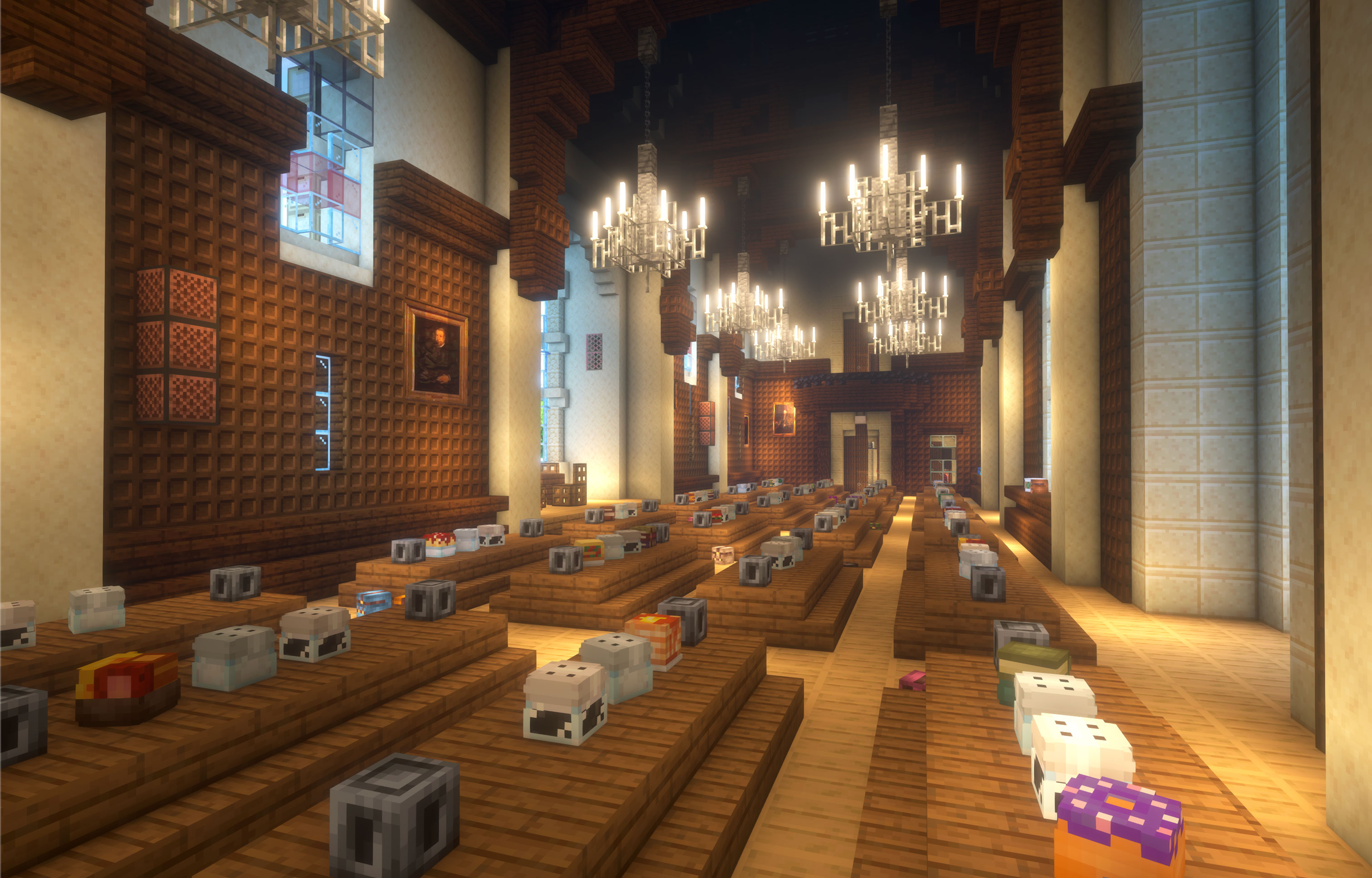
I have been playing Minecraft since I was 8 years old. Minecraft is a beloved sandbox game with open-world gameplay that lets players build, craft and explore. It is a game where I have found many friends, a freelance job re-creating player skins, and ultimately, a home for my creativity. Recreating campus buildings in Minecraft has been a goal of mine since my first year, and I started building this replica of Peirce Dining Hall on a whim on March 18, 2025, the day before my birthday, and completed it on Aug. 19, 2025 — the day I left St. Louis for my senior year at Kenyon. The finished build is composed of 3,723,506 in-game blocks.
I posted the very beginning of the project to the anonymous messaging platform many Kenyon students use and received a lot of positive feedback, which motivated me to continue the project (below, left).
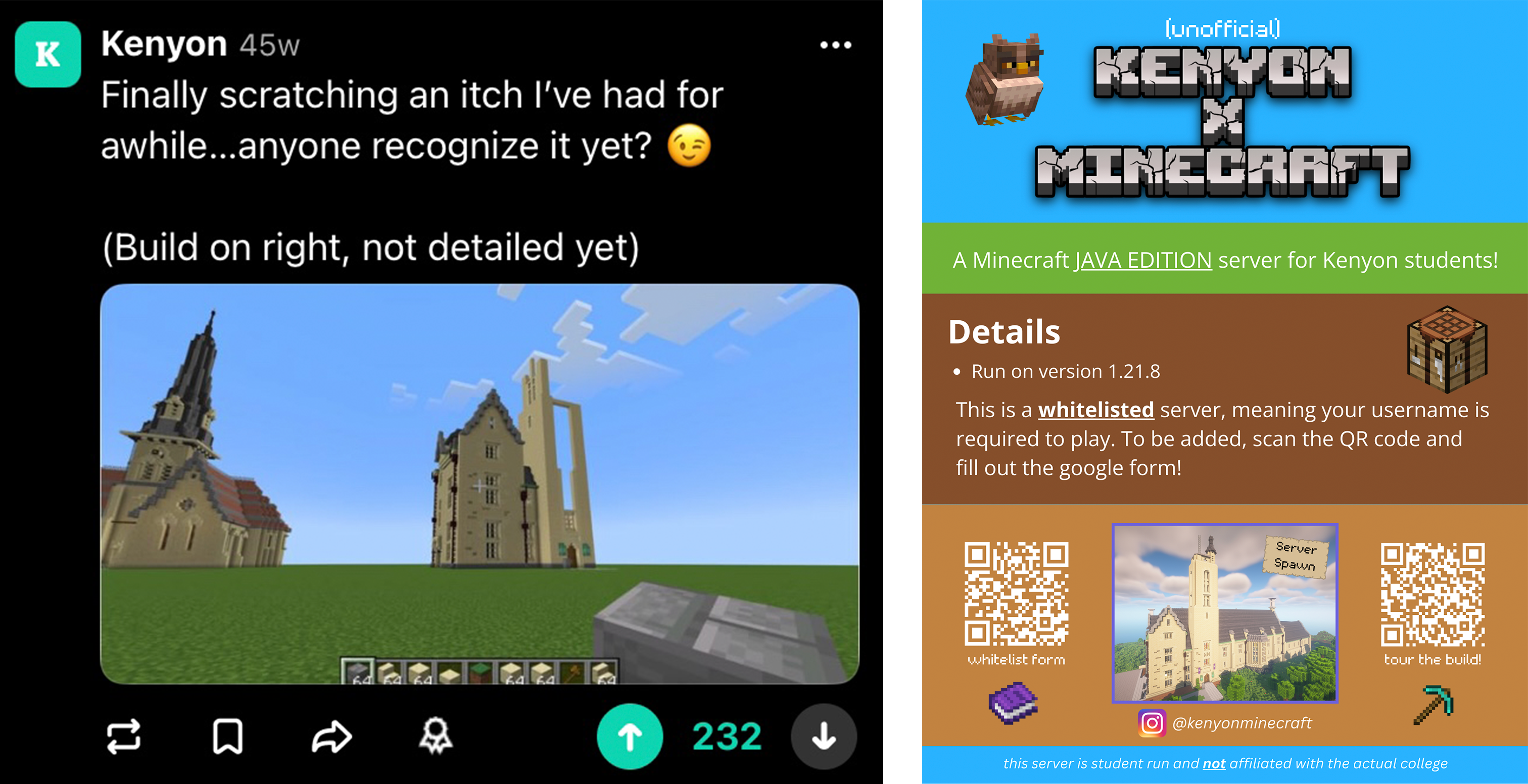
I wanted to create Peirce in Minecraft as the “spawn” (a central hub) for a multiplayer Kenyon Minecraft server I would host for students within the game (above, right). Minecraft has always been a place I found community in growing up, and I wanted to provide that for the campus to connect with one another in a unique manner, all while having fun.
I scoured the internet for every possible angle of Peirce, including Flickr, Google Street View, YouTube, Facebook and Instagram. I visited Kenyon’s archives to examine Peirce’s schematics (below), then compiled 3GB of 412 references into organized Google albums.
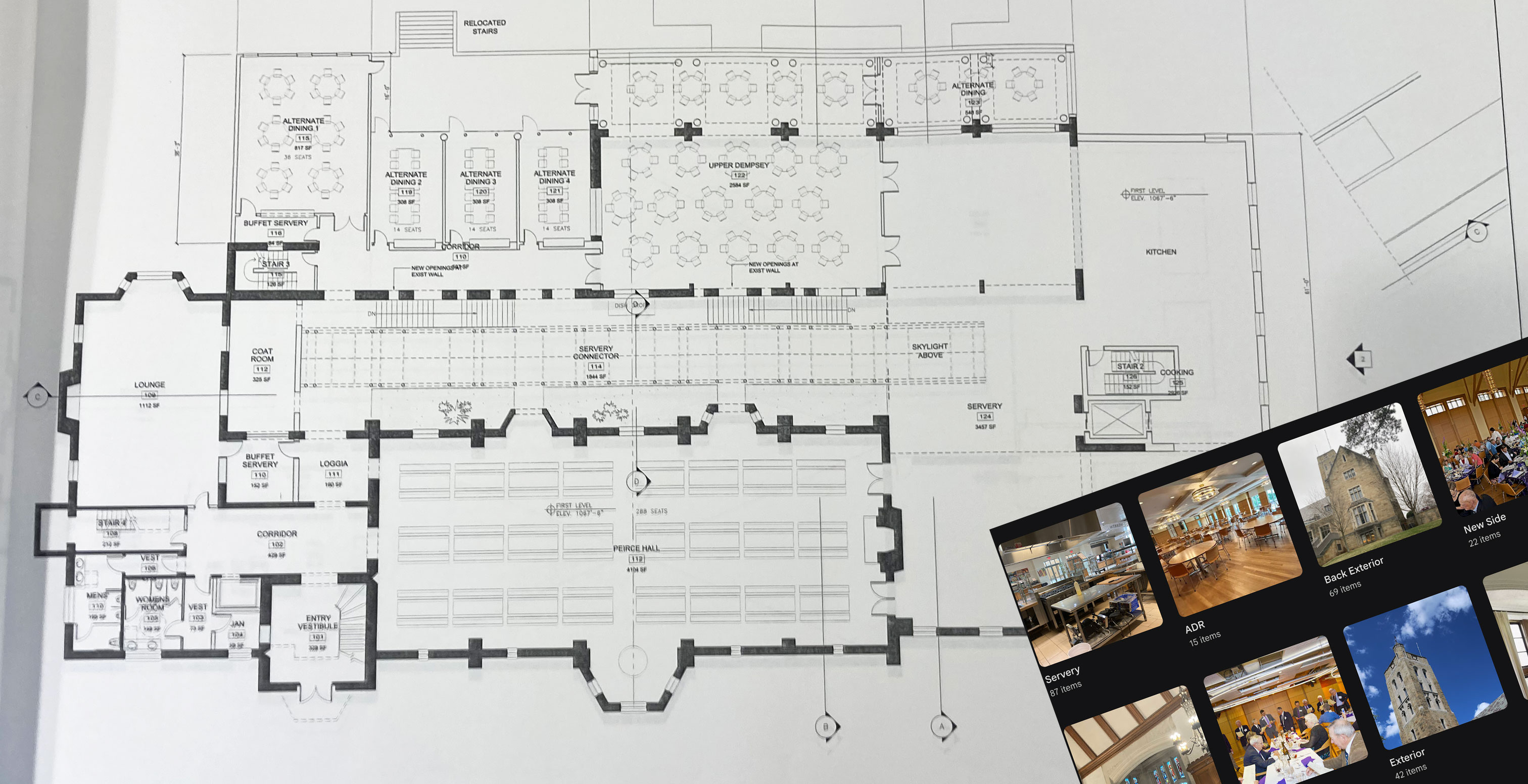
The project was harder to tackle when I returned home for the summer and still needed more documentation, so I recruited my mother, an alumna from the Class of 1995, to take photos when she attended Kenyon’s 2025 Reunion Weekend (above, inset).
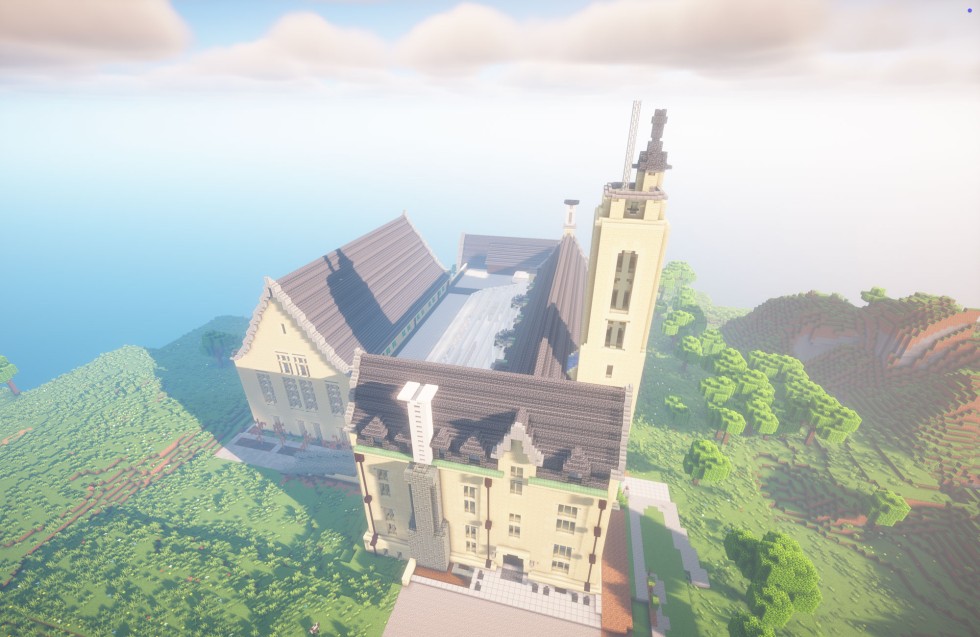
Translating a brick-and-mortar building into a blocky video game has its challenges. I struggled with proportionality, along with the game’s limited block palette. Some of the block colors I used were not quite accurate to Peirce — for example, I used the game’s bright sandstone in place of Peirce’s more weathered appearance.
Another challenge was my limited student access to certain rooms. While AVI was kind enough to show me the back storage rooms behind the servery, many other spaces, including the dish area and several rooms on the second and third floors, remain untouched in the virtual build. The roof was also a nightmare to construct: I had to rely on blurry drone shots I found on Kenyon’s YouTube channel and Google Street View.
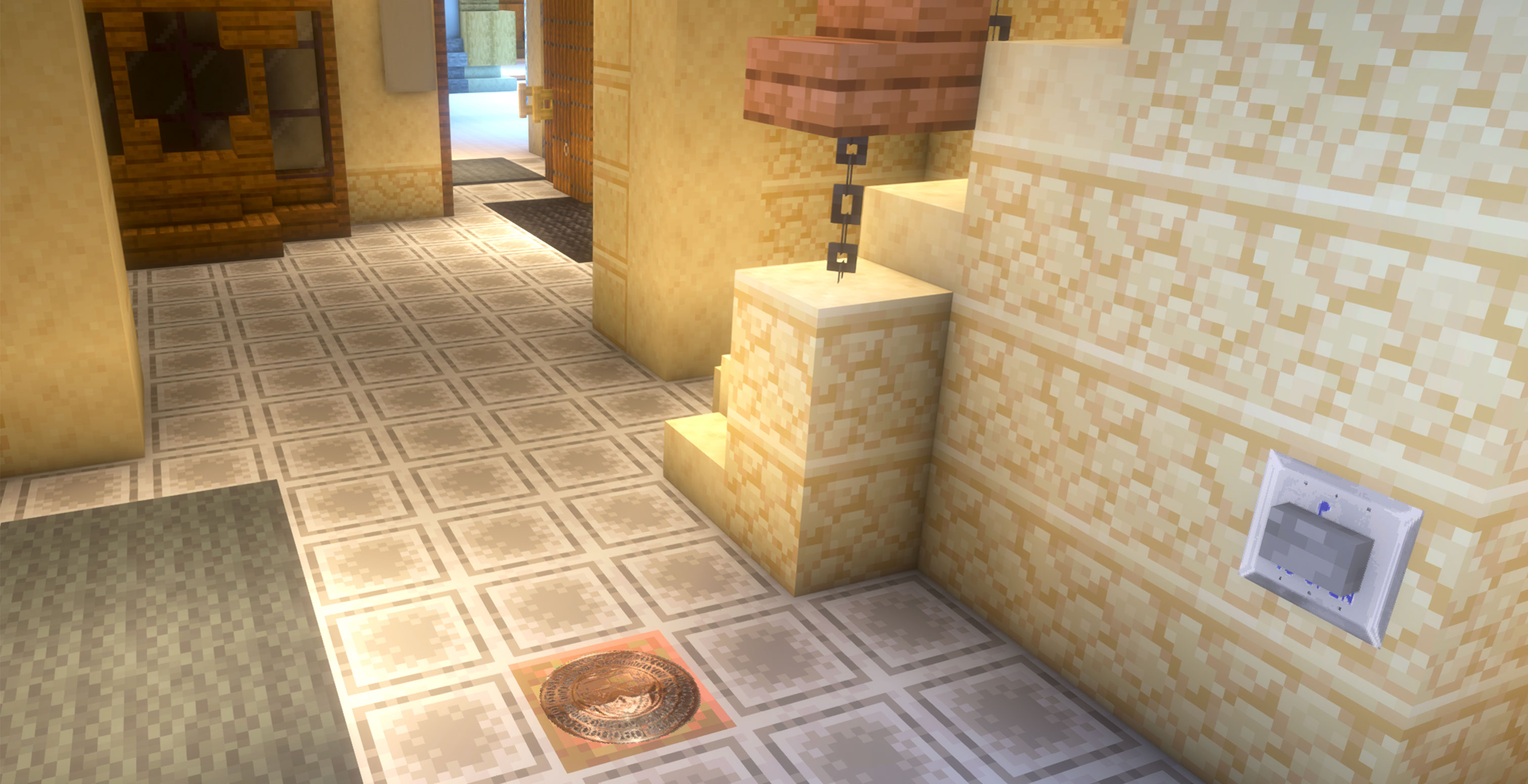
I am proud of the small details I included (like the Peirce seal, below). I wanted to convey the elements that would make someone in the greater Kenyon community say, “Oh, that’s Peirce!” beyond just the exterior structure.
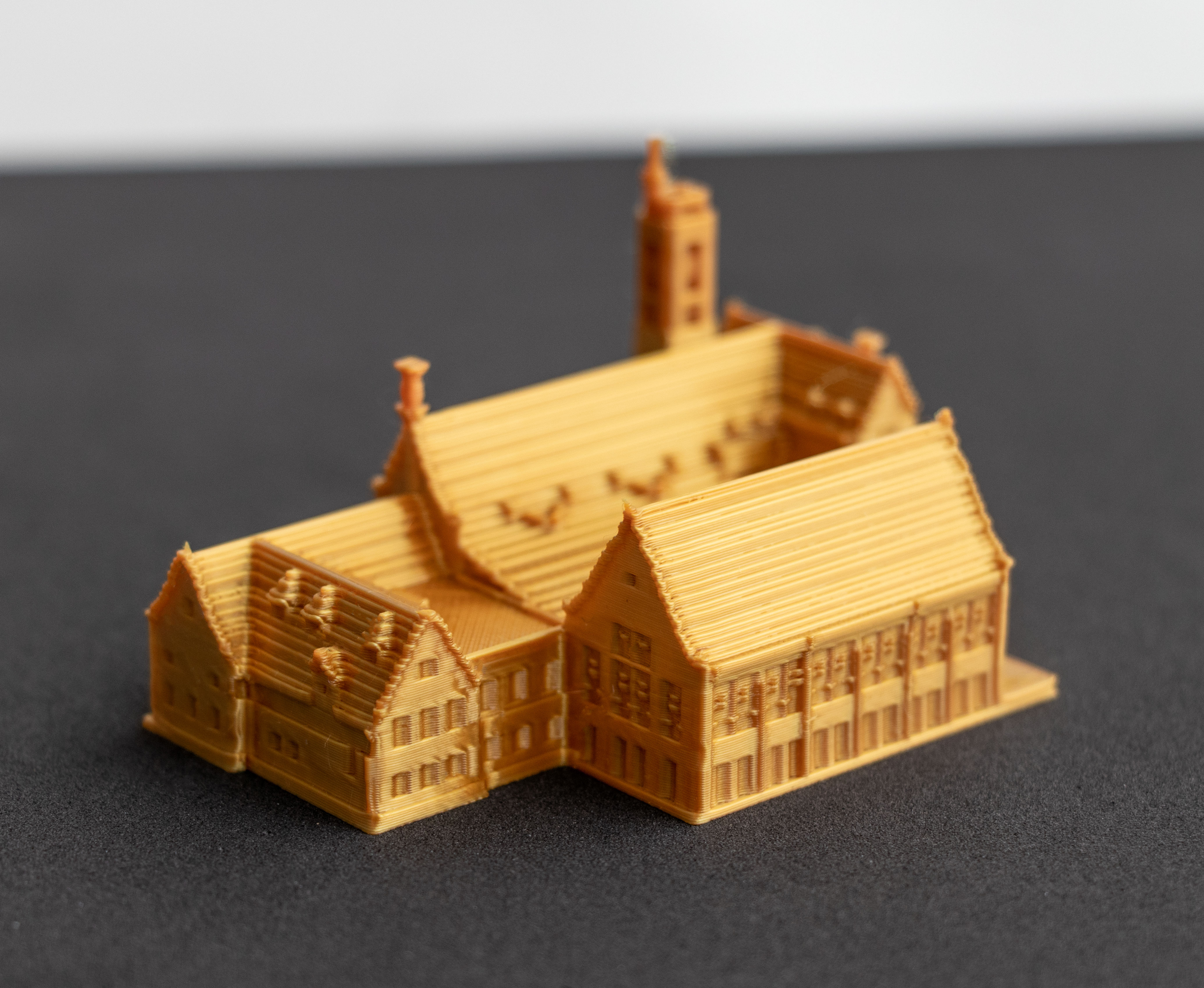
Drawing further on my artist background, I converted my finished Peirce building into a 3D printable .stl file, resulting in miniatures that sit on the desks in my dorm room and my Horvitz art studio (left).
From the use of custom heads to depict food and plates in the servery (and the invisible armor stands and item frames that allow custom placement of these objects), to the application of Minecraft’s map system to re-create the Peirce pub logo, the entrance seal and the portraits adorning “Old Side,” (below) these smaller details make the virtual Peirce feel real and familiar.
Images courtesy of Xander Newman ’26.
Read the Sept. 2025 Collegian article by Dalia Fishman ’27.
Follow @kenyonminecraft on Instagram.
Posted in
Science & TechnologyAuthor
Xander Newman ’26From Alumni Magazine - Spring 2026

Kenyon produces top journalists without offering a journalism degree.
Read The StoryVirginia McBride ’15 uses an interdisciplinary approach at the Metropolitan Museum of Art to work with photographs…
Read The StoryKenyon’s liberal arts approach to AI and computing prepares students to shape — and question — the technologies…
Read The Story