Written in Code
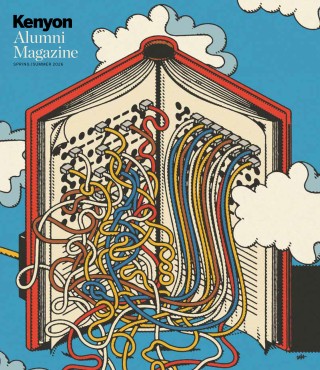
Kenyon’s liberal arts approach to AI and computing prepares students to shape — and question — the technologies…
Read The StoryThe professor of sociology reflects on the importance of finding surprise and humor in the world.
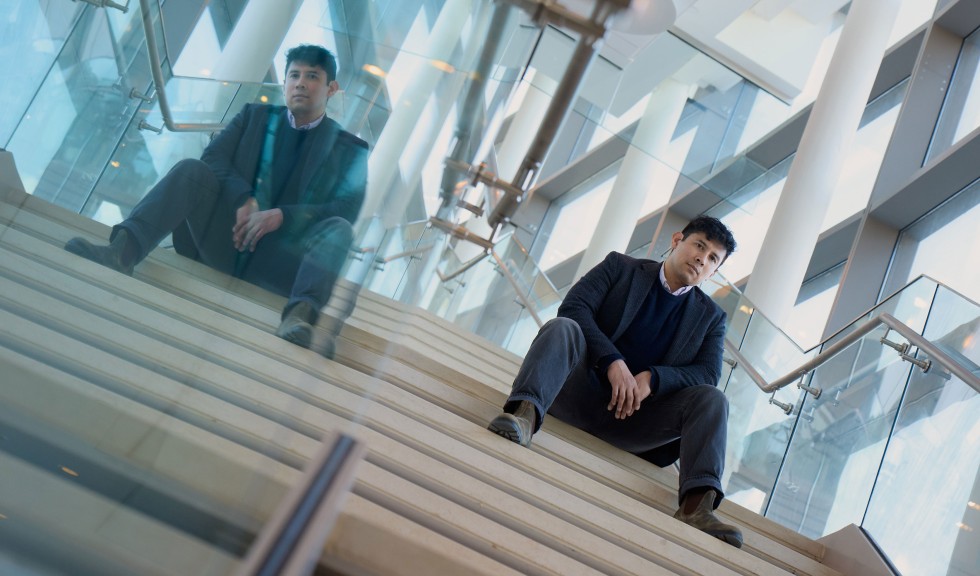
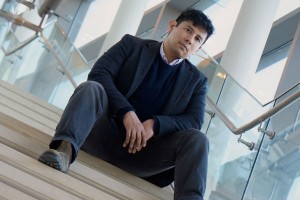
Celso M. Villegas joined the Kenyon community in 2011 and teaches in both sociology and international studies. Trained in comparative historical analysis, his research examines democracy, culture and political life in the United States and abroad. In 2025, he began a three-year term as Kenyon’s National Endowment for the Humanities Distinguished Teaching Associate Professor of Sociology.
“Along with a community of professors and staff, I have been thinking about how being ‘critical’ comes with dispositions to see the world and the people in it with suspicion,” Villegas said. “We’re trying to teach toward ways of seeing each other with ‘faith,’ in the words of philosopher Paul Ricœur. Seeing the world and its surprises, being a generous editor — these are things intelligent, learned people do, too, not just criticize. I want Kenyon to be known as a place that teaches this.”
Hometown:
I was born in the Philippines and grew up all over the peninsula in the San Francisco Bay Area. I’d like to think I’m still a Californian.
Favorite place to visit:
I love visiting my extended family. Like lots of Filipinos, we’re diasporic — southern California, Manila, Glasgow, all over.
Teaching philosophy:
I teach toward surprise!
Proudest accomplishment to date:
When I started teaching here, I scoffed at the idea that professors made much of a difference in students’ lives. One student even remembers me saying, “I’m not here to teach you life lessons!” But my advisees have invited me into their process of becoming. They’ve let me argue with them and laugh with them; I’ve consoled and celebrated them. In all that, they’ve made me wise — or, in more sociological terms, we’ve agreed that I’m wise now. I’m proud of all the students I’ve gotten to be wise with over the years. They make me very happy.
What is something you have learned from your students?
That even the densest sociological theory can be funny. Years ago in a seminar, we were working through a particularly challenging section of Gramsci’s “Prison Notebooks.” There was a heavy pause in the discussion, and then Olivia Grabar Sage ’15 said, with tension-cutting sarcasm, “I like how he called women ‘luxury mammals.’” Everyone burst out laughing. Later in the course, Charlie Collison ’15 described Jürgen Habermas as “funny” because “he’s got jokes” in “The Theory of Communicative Action.” I don’t think anyone ever has or ever will call Habermas funny.
Book that changed your life:
Barrington Moore Jr.’s “Social Origins of Dictatorship and Democracy” was the hardest, most challenging book I read in college. The grandness of his comparison of the paths toward democracy, communism and fascism completely reframed what I thought was possible with human thinking.
Best advice you’ve been given:
Becoming a professor hasn’t been easy; I came close to quitting after my grandmother died. My mentor, sociologist Jeffrey Alexander (whose festschrift I’m co-editing), looked at me and said, “Oh, you’re just having a midlife crisis!” He told me to read Levinson’s “Seasons of a Man’s Life” and said, “You need something ambitious to get you through it.” Leaning into being a postcritical teacher and scholar, working up this NEH project and building a community with it — that’s what’s given me meaning in the second half of my life.
Anything else?
Did you know that in “Star Trek IV,” the Cetacean Institute in Sausalito was actually the Monterey Bay Aquarium? Ask anyone who saw me re-enact scenes from the film the last time I was there.
Photography by Brian Kaiser
Posted in
Society & PoliticsFrom Alumni Magazine - Spring 2026
Kenyon’s liberal arts approach to AI and computing prepares students to shape — and question — the technologies…
Read The StoryVirginia McBride ’15 uses an interdisciplinary approach at the Metropolitan Museum of Art to work with photographs…
Read The StoryKenyon produces top journalists without offering a journalism degree.
Read The Story